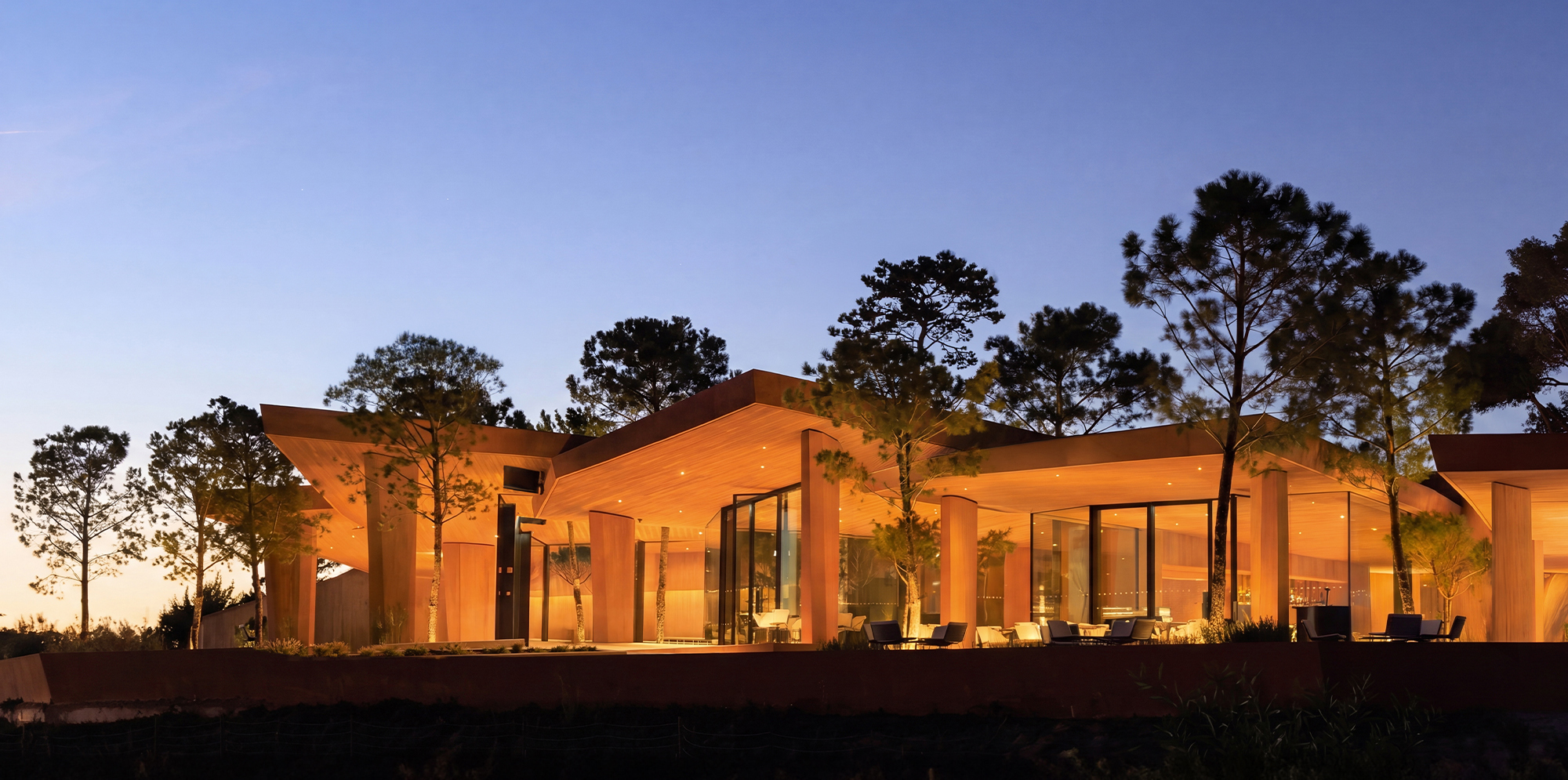
Light that belongs to the place.
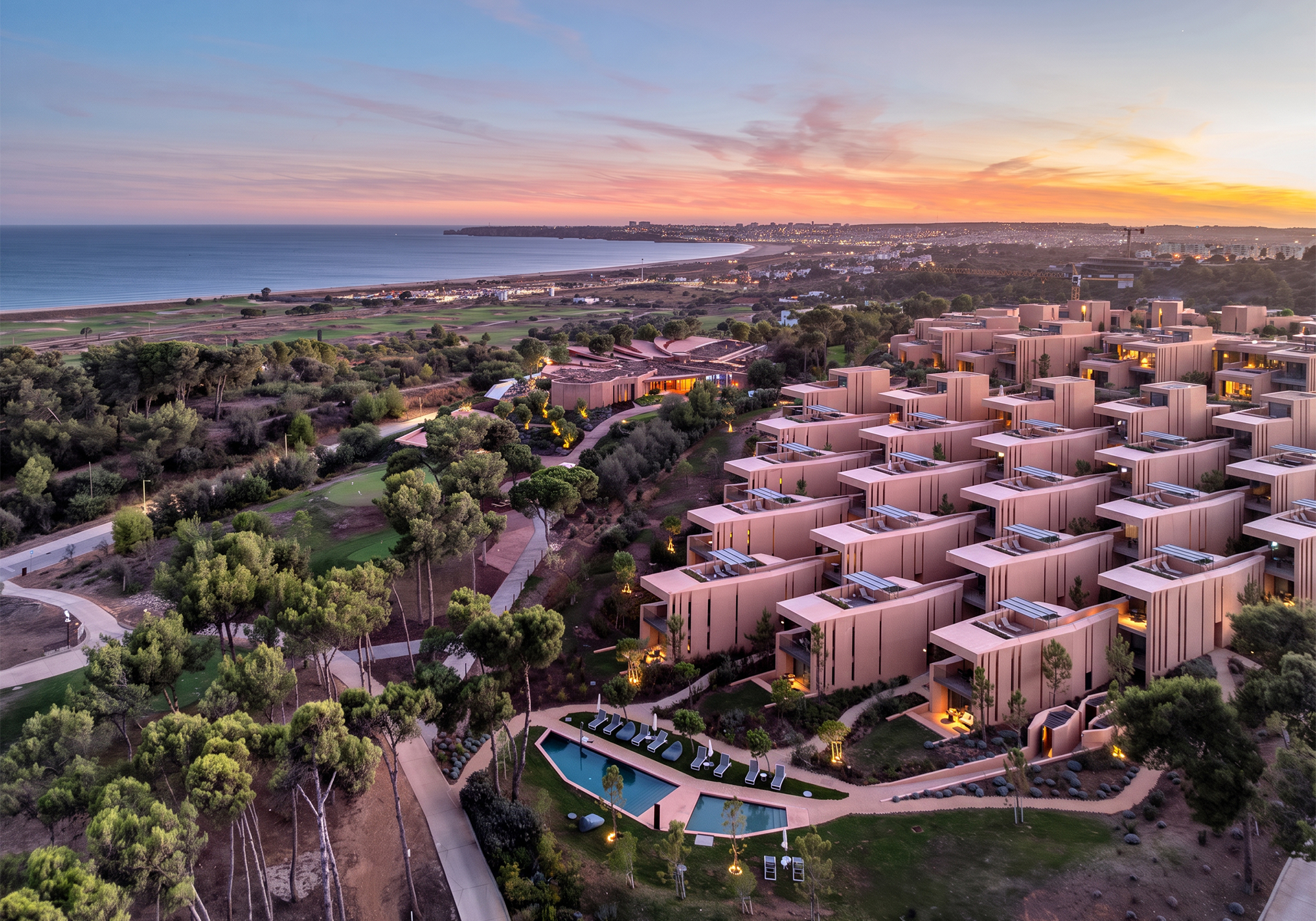
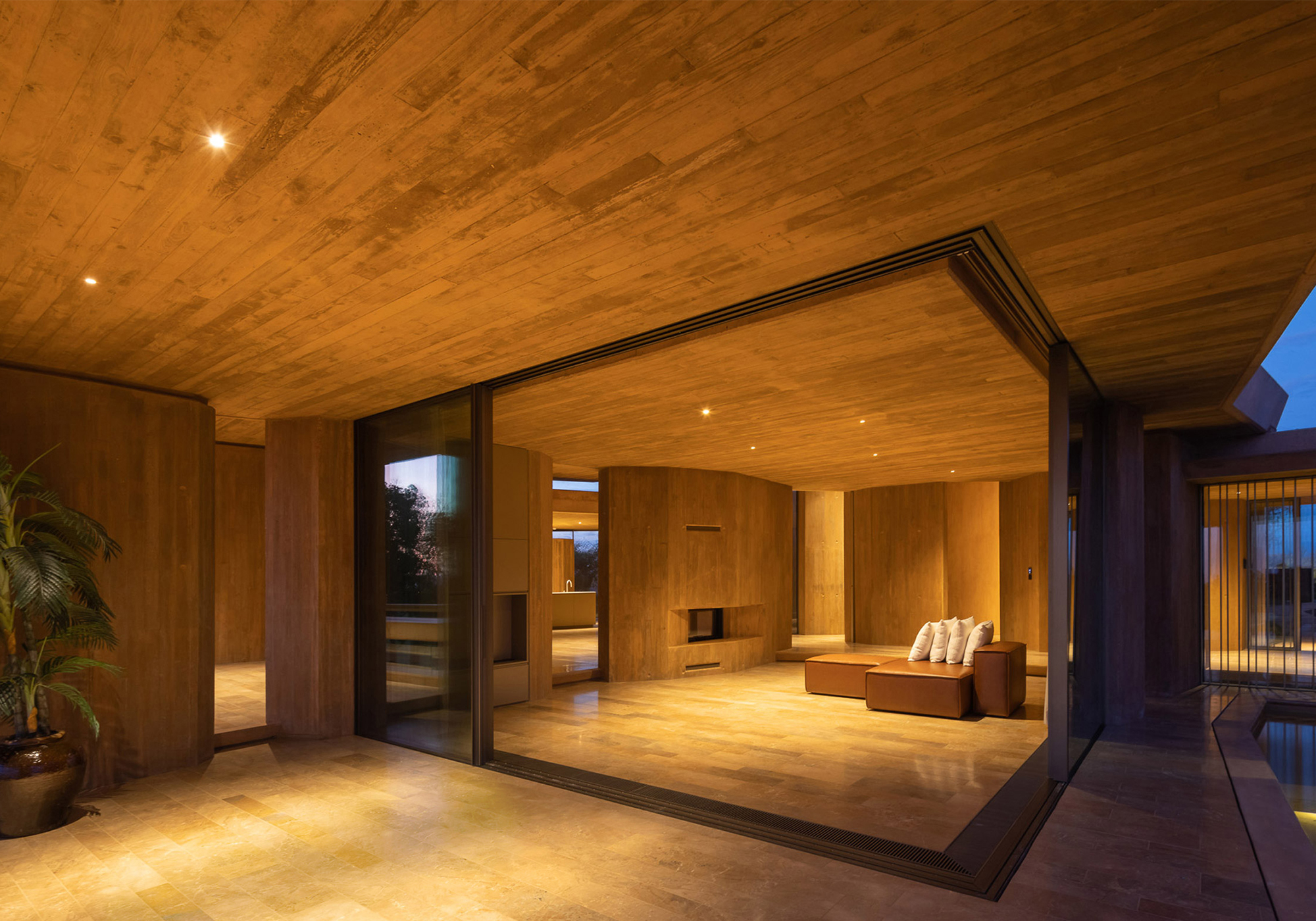
On a gentle rise above Meia Praia, where the pinewoods of the western Algarve give way to the Atlantic, Palmares Ocean Living & Golf unfolds across the landscape rather than over it. Designed in its entirety by Pritzker Prize winners RCR Arquitectes for Kronos Homes, the resort gathers a clubhouse, residences and signature villas into a single architectural language: overlapping planes of red pigmented concrete, tinted with the clay of the Algarve soil, that step down with the terrain toward the sea. Pines are preserved and left to rise through the roofs, floors of Rosa Zarci marble carry the same earthen tone indoors, and glazed façades open every space to the ocean. Across its 191 hectares, the masterplan gathers 460 homes, 103 villas and 357 apartments, yet builds on only a fraction of the land: a deliberately minimal footprint that lets the project merge with its surroundings and frame the landscape rather than dominate it.
For Maurici Ginés, founder of Artec Studio, light could only be an extension of RCR’s architecture, never an addition to it. RCR work with a quiet architecture, one that gathers everything good about a place without imposing on it, and the lighting answers in the same register: a deliberate minimalism of formats, luminaires reduced to their smallest expression and almost dematerialised, so that what is read is the architecture and its natural materials, not the instruments that light them.
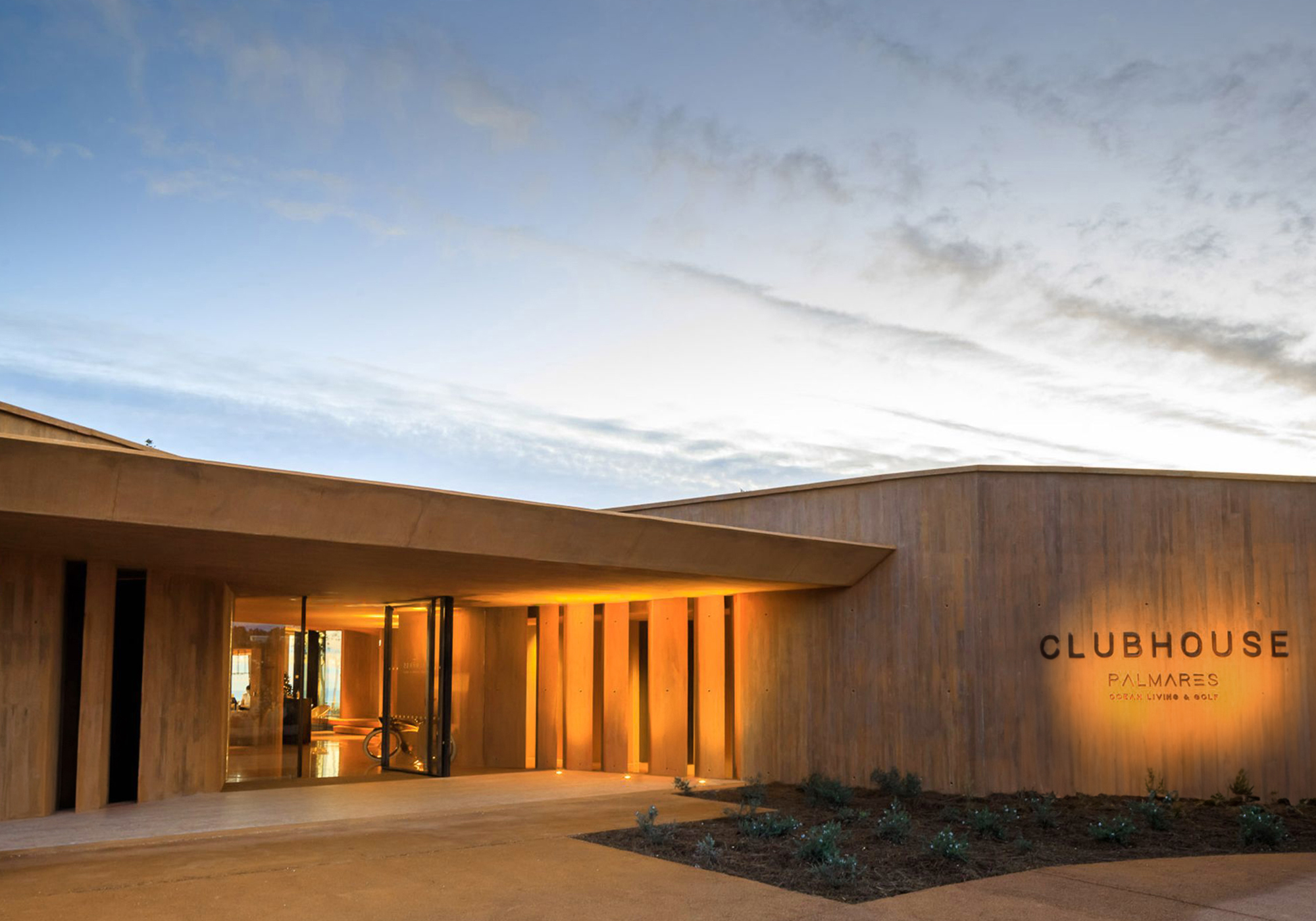
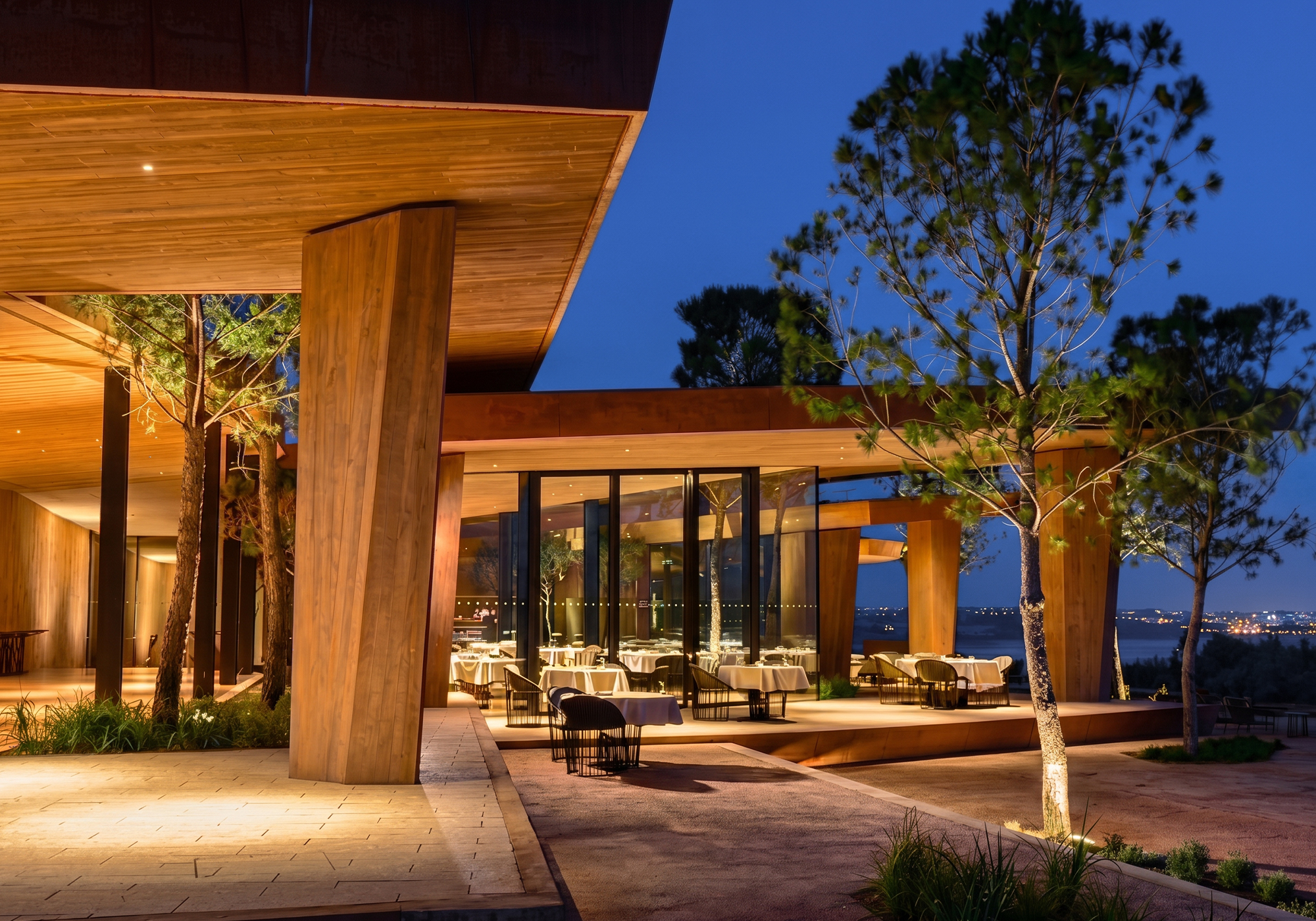
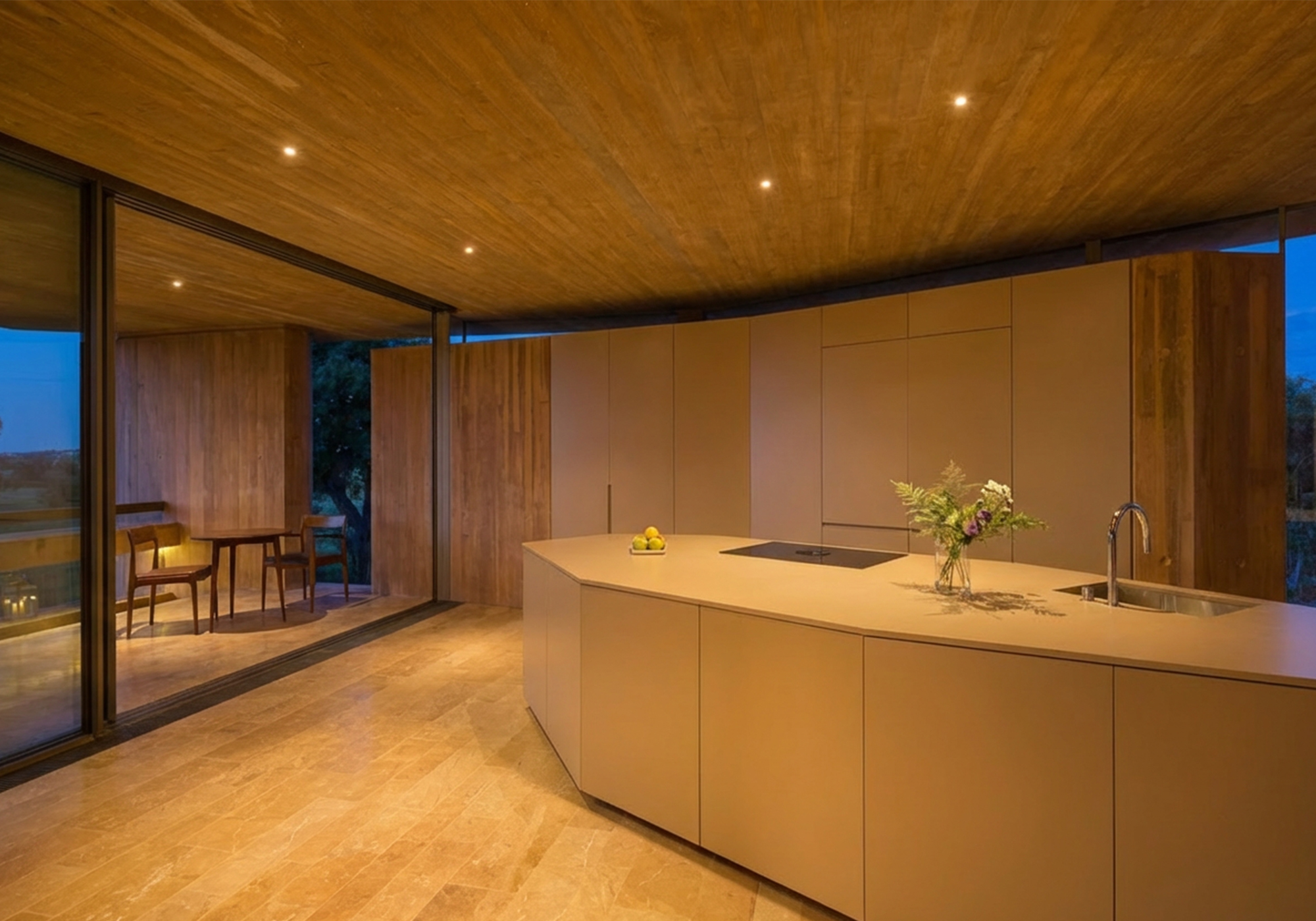
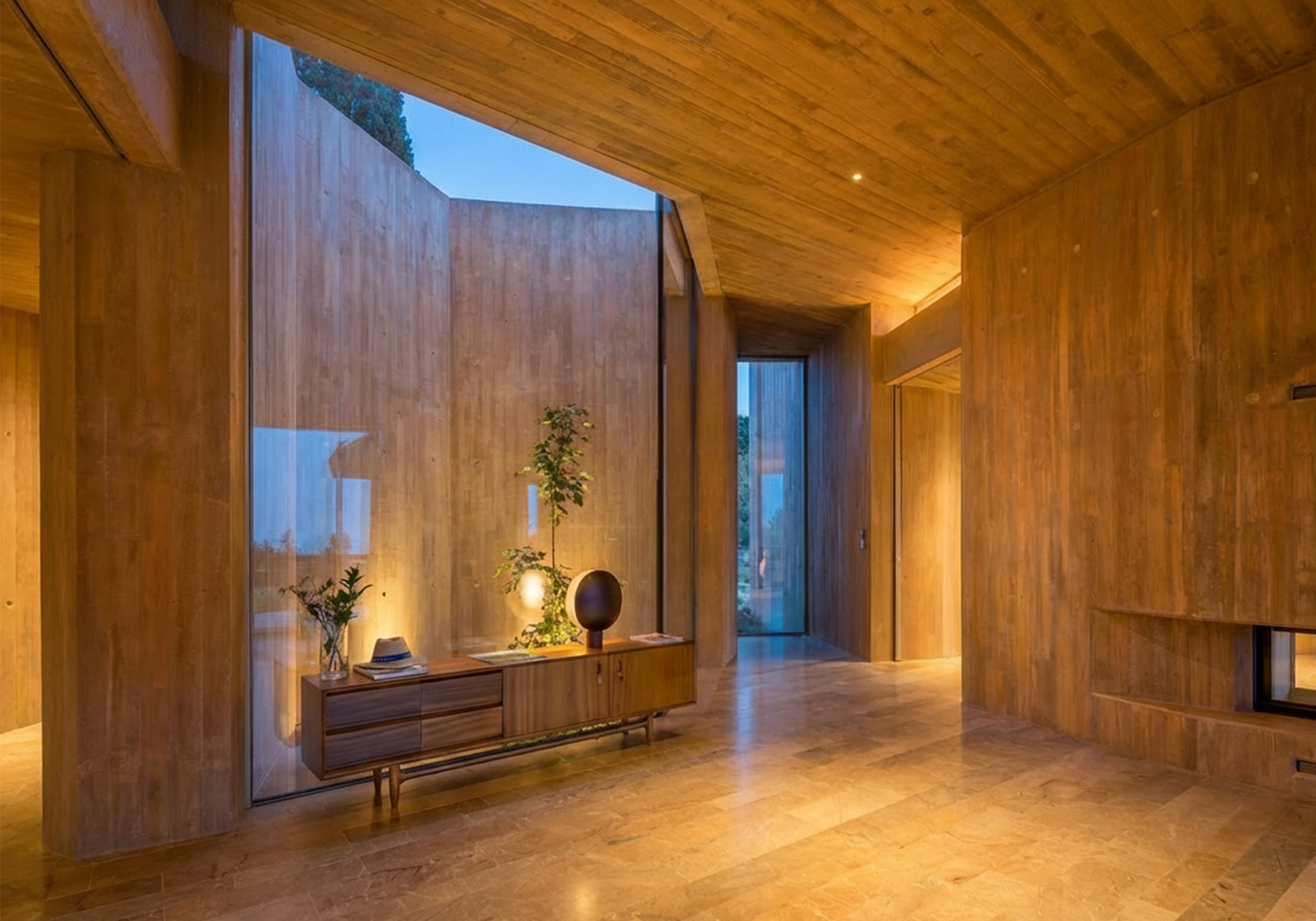
By day, this restraint turns the lighting near-invisible. Recessed into the red concrete planes and the natural stone, the fixtures step back entirely, leaving nothing to compete with the dialogue of concrete, marble and pine.
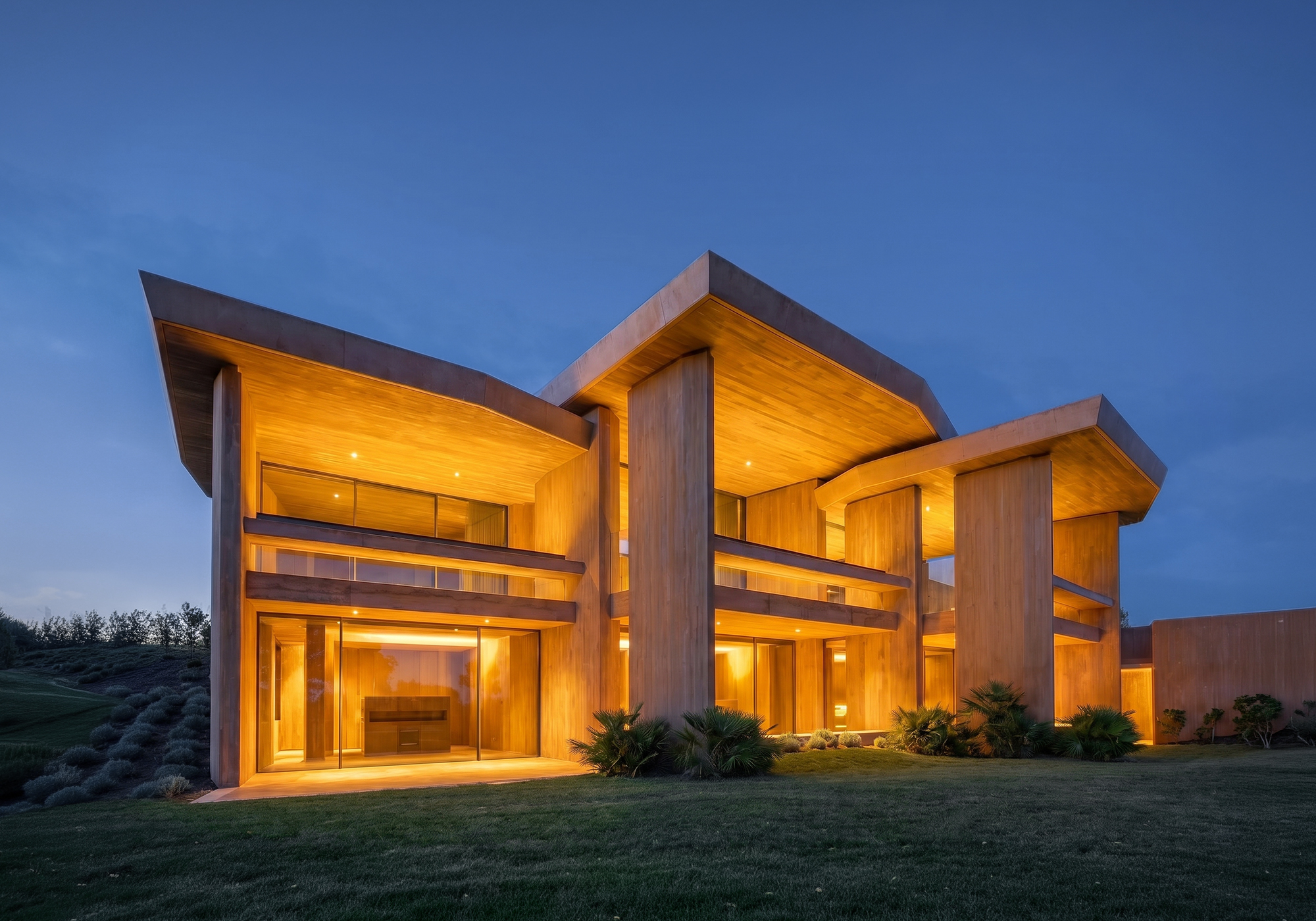
By night, the same fixtures that vanished by day quietly come into their own. The light is indirect and bounced, grazing the concrete volumes and the canopies rather than projecting outward, so the buildings settle into the pinewood like subtle lighthouses, guiding without disrupting the nocturnal ecosystem.
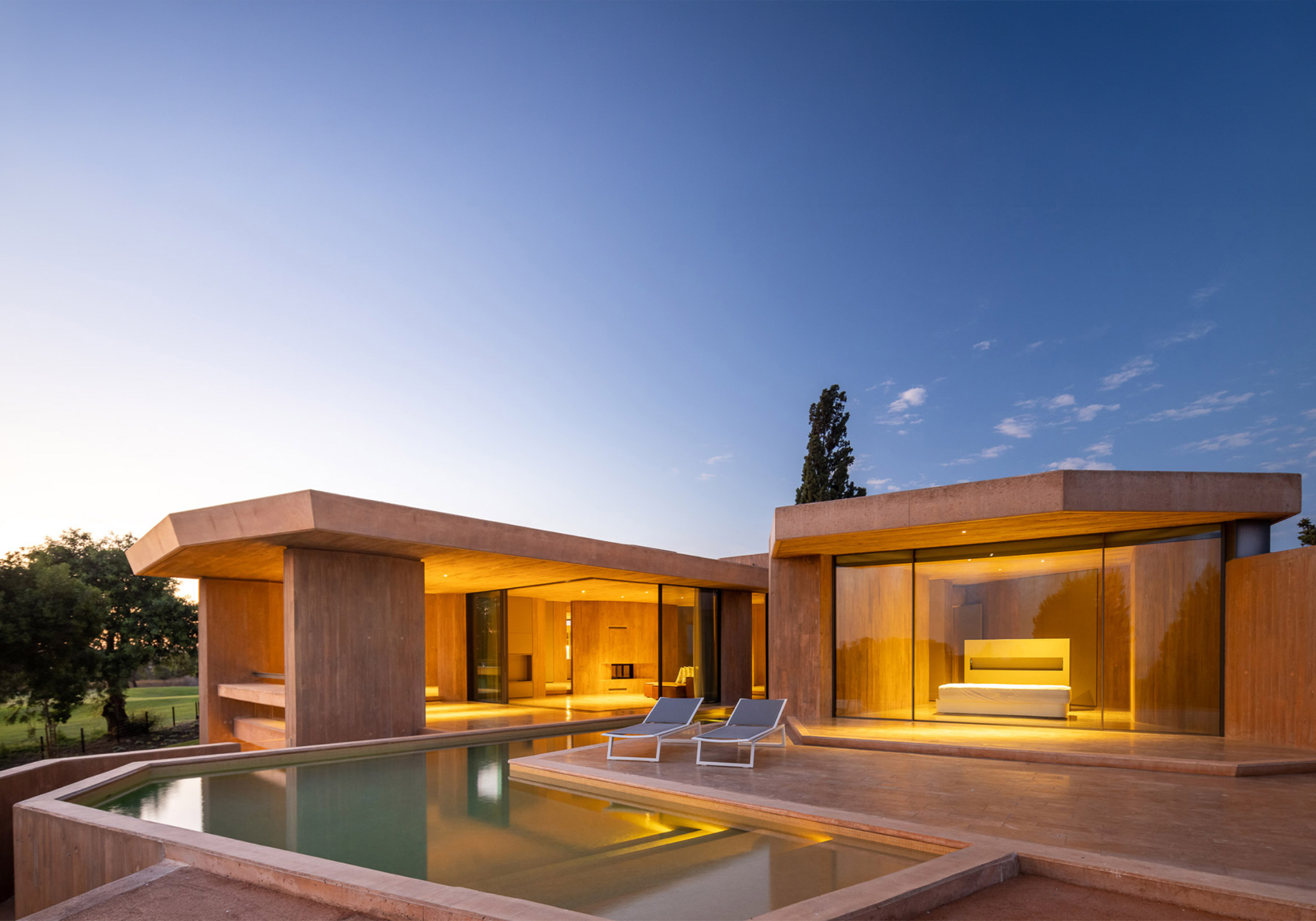
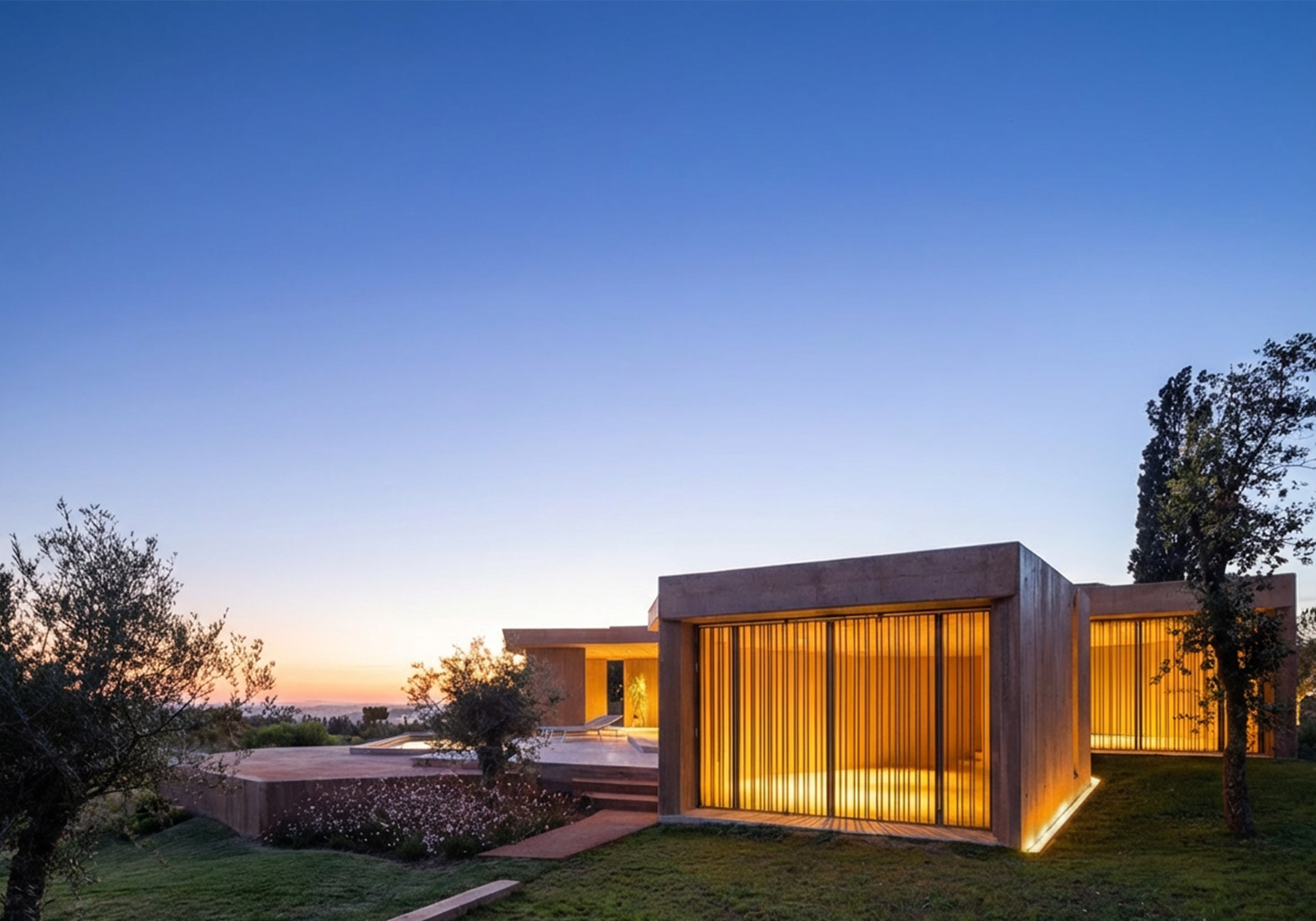
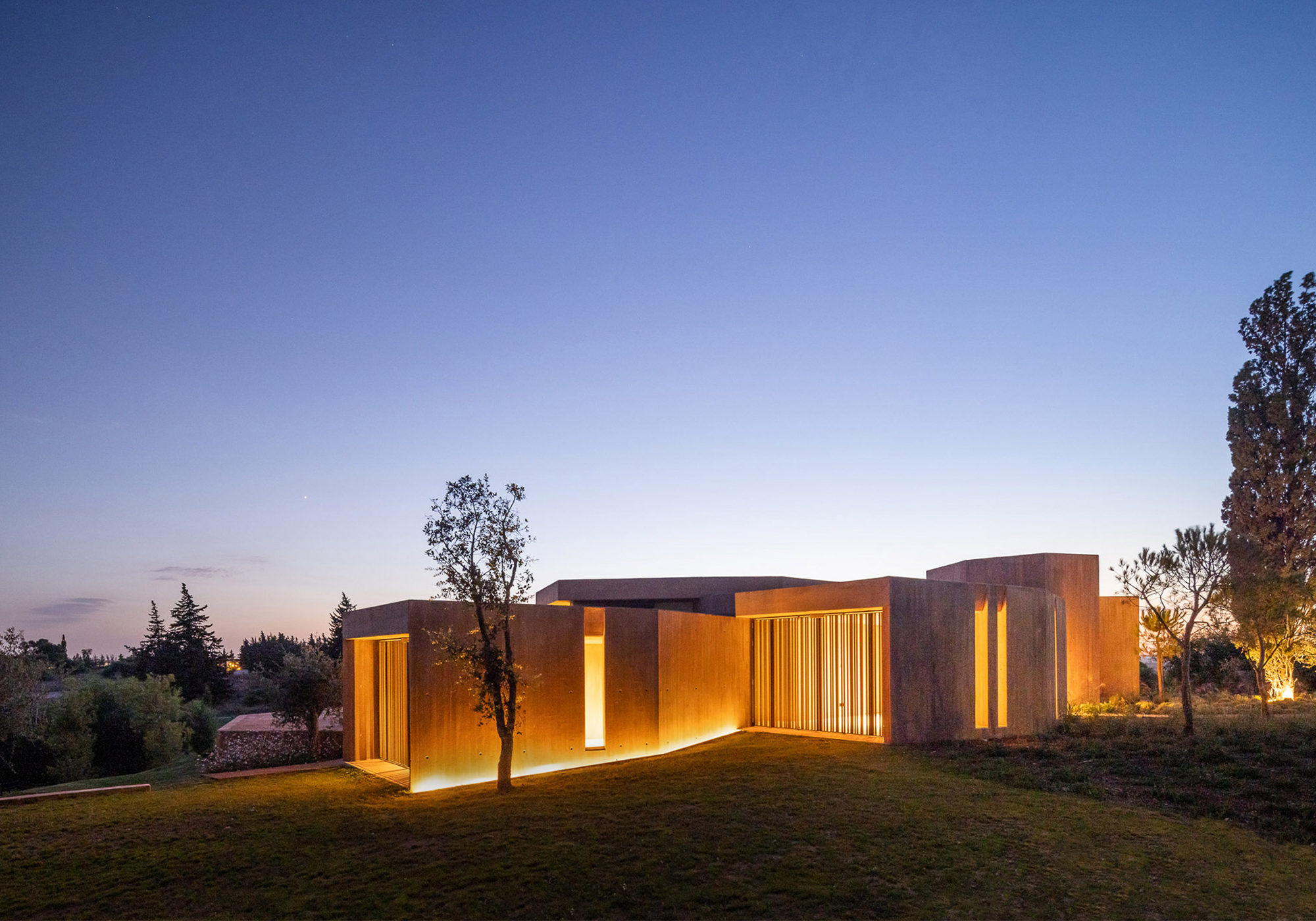
At the Casa Club, the social heart of Palmares, light works with the building’s tiered slabs and multifaceted columns. Warm, restrained illumination settles among the terraces and lounges without breaking the continuity between inside and out, letting the panorama of Meia Praia, the Alvor estuary and the Monchique hills remain the protagonist as day turns to evening on the Al Sud restaurant terrace.
After dark, the resort reads as a quiet presence in the pinewood. Light is indirect and bounced, grazing the concrete volumes and the canopies rather than projecting outward, so the buildings sit in the landscape like subtle lighthouses, guiding without disrupting the nocturnal ecosystem. The Atlantic horizon is never lost.
Inside the residences and signature villas, light moves with the day. Dimmable scenes shift from morning to evening to rest, calibrated for the wellbeing of those who live here, while every luminaire is chosen under sustainability criteria, in keeping with the resort’s BREEAM commitment. Whether in a one-bedroom apartment or a four-bedroom villa with its terraces opening to the sea, the light keeps the focus where it belongs: on the landscape and the ocean.
RELATED COLLECTIONS


